

Rising from a vast stone terrace at the foot of the Mountain of Mercy in southern Iran, Persepolis is one of the most breathtaking ancient sites on Earth. For Iranians it is far more than a ruin: it is a symbol of the first great Persian empire, of a civilization that brought dozens of nations together under one roof, and of a heritage that still shapes Iranian identity today.
In this guide, we explore the history of Persepolis, its most famous monuments, the meaning of its stone reliefs and what you need to know if you dream of visiting.
What Is Persepolis?
Persepolis was the ceremonial capital of the Achaemenid Empire, the first Persian empire, which at its height stretched from Egypt and the Aegean Sea to the Indus River. Iranians call it Takht-e Jamshid, “the Throne of Jamshid,” after the legendary king of the Shahnameh who is said to have founded Nowruz.
The name Persepolis comes from Greek and means “city of the Persians.” The site lies in Fars Province, about 60 kilometers northeast of Shiraz, and has been a UNESCO World Heritage Site since 1979.
A Brief History of Persepolis
Built by Darius the Great
Construction began around 518 BC under Darius the Great. Workers leveled a huge platform against the mountain and raised palaces, halls and gateways on top of it. The work continued for more than a century under his son Xerxes and his grandson Artaxerxes I.
Clay tablets found at the site show that the builders were paid workers, men and women from many lands, who received wages in silver and food rations. It is a remarkable detail about one of the great building projects of the ancient world.
Fire and silence
In 330 BC, Alexander the Great captured Persepolis and the palaces were burned. The city never regained its former glory, and for centuries its columns stood quietly in the plain, admired by travelers and poets. Large-scale excavations in the 20th century brought its reliefs and treasures back to light.
The Most Famous Monuments of Persepolis
The Gate of All Nations
Visitors once entered Persepolis through the Gate of All Nations, built by Xerxes. Its doorways are guarded by enormous lamassu, winged bulls with human heads, and an inscription in Old Persian, Elamite and Babylonian proclaims that the gate was built by the grace of Ahura Mazda.
The Apadana Palace
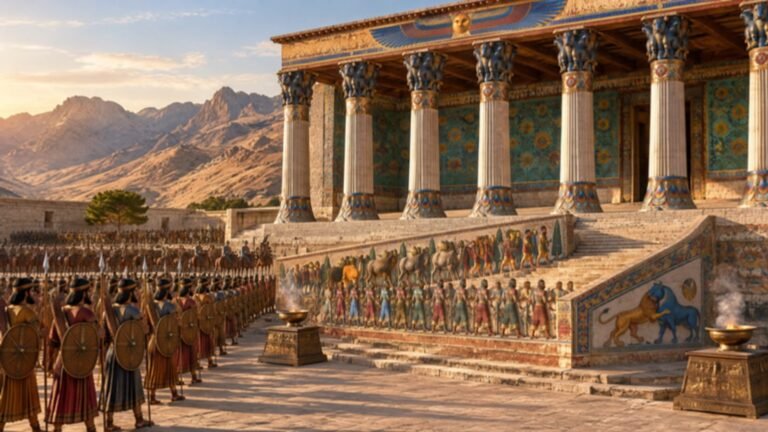
The Apadana was the grand audience hall, where the king received delegations from across the empire. Its roof rested on tall stone columns topped with capitals carved as bulls, lions and griffins. Only a few columns still stand today, but their height alone gives a sense of the hall’s scale.
The reliefs of the gift-bearers
The staircases of the Apadana are covered with some of the finest reliefs of the ancient world: delegations from more than twenty nations, each in its own dress, bringing gifts to the king, such as horses, gold, fabrics, camels and even a lioness. The scene is often linked to the celebration of Nowruz, and it shows a powerful idea: many peoples, one empire, living side by side.
The Hall of a Hundred Columns
The largest hall at Persepolis was the Hall of a Hundred Columns, a vast throne room begun by Xerxes and completed by Artaxerxes I.
Naqsh-e Rostam
A short drive away lies Naqsh-e Rostam, where the tombs of Darius the Great and three other Achaemenid kings are carved high into the cliff, alongside later Sasanian reliefs. Most visitors combine it with Persepolis and with Pasargadae, home of the Tomb of Cyrus the Great.
Why Persepolis Matters to Iranians Today
For Iranians everywhere, Persepolis is a source of deep pride. It stands for a civilization known for its art, its organization and its respect for the many cultures it ruled. Each spring, thousands of Iranians visit the site during the Nowruz holidays, and its columns appear on everything from banknotes to wedding invitations and works of art.
Tips for Visiting Persepolis
- Best time to go: spring and autumn, when the weather in Fars is mild. Arrive early in the morning to avoid the heat and the crowds.
- Base yourself in Shiraz: the city of Hafez and Saadi is about an hour’s drive away.
- Combine your visit: plan a full day for Persepolis, Naqsh-e Rostam and Pasargadae.
- Bring water, a hat and good shoes: the site is large and has little shade.
- Check current travel advice from your government before planning a trip.
Wear a Piece of Persepolis
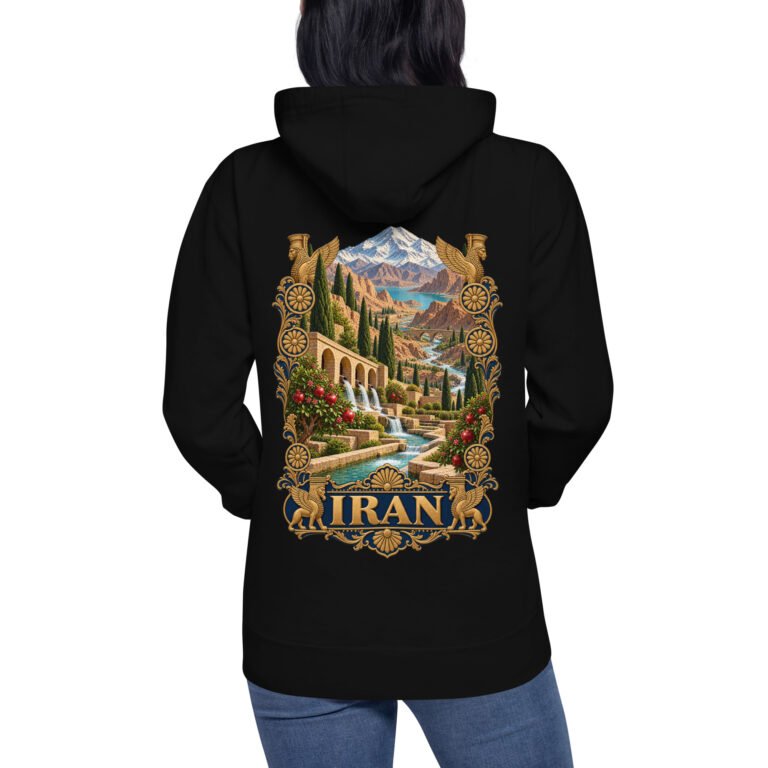
If Persepolis holds a special place in your heart, you can carry it with you. Our Fars Hoodie and Fars T-Shirt feature Persepolis and its Achaemenid columns, and our Gate of All Nations Hoodie brings the winged lamassu to life. Explore more in our Spirit of Iran Collection and our guide to the 31 provinces of Iran.
Frequently Asked Questions
Who built Persepolis?
Persepolis was founded by Darius the Great around 518 BC. Building continued under Xerxes and Artaxerxes I.
Where is Persepolis?
Persepolis is in Fars Province in southern Iran, about 60 km northeast of Shiraz.
What is Persepolis called in Persian?
It is called Takht-e Jamshid, meaning “the Throne of Jamshid.”
Who destroyed Persepolis?
Alexander the Great captured Persepolis in 330 BC, and its palaces were burned.
Is Persepolis a UNESCO World Heritage Site?
Yes. Persepolis was inscribed on the UNESCO World Heritage List in 1979.
Persepolis was built by the successors of Cyrus the Great, whose tomb still stands at nearby Pasargadae. Read the story of the king and the day Iranians dedicate to him in our article on Cyrus the Great Day.
For the full story of the dynasty that built Persepolis, read our guide to the Achaemenid Empire.


2 Comments