Few symbols carry as much history, pride and emotion for Iranians as the Lion and Sun (Shir-o-Khorshid). For centuries it appeared on coins, tiles, banners and royal decorations, and for generations it stood at the center of the green, white and red flag of Iran. Today you will see it at Nowruz gatherings, in family homes and on the clothes of Iranians all over the world.
But where does the Lion and Sun come from, and what does it really mean? In this guide, we look at the history of this ancient emblem, the meaning behind each of its elements and why it remains so close to the hearts of Iranians today.
What Is the Lion and Sun?
The Lion and Sun is a classic Iranian emblem showing a lion standing in profile with the sun rising behind its back, often with a radiant sun bearing a human face. Over the centuries it has appeared in many forms. In its oldest and purest form, the lion simply stands or walks proudly before the sun. Later, in the Qajar era, a sword and a crown were added to the royal version of the emblem.
In Persian it is called Shir-o-Khorshid: shir means lion and khorshid means sun.
A Brief History of the Lion and Sun
Ancient roots in astronomy
The image began in the sky. In ancient and medieval astronomy, the sun was said to be strongest when it stood in the sign of Leo, the lion. The picture of a lion with the sun on its back was a popular astrological symbol across the region, a sign of power, light and good fortune.
Coins, tiles and manuscripts
By the 12th and 13th centuries, the lion and sun motif appeared on coins, metalwork, ceramics and illustrated manuscripts across the Persian-speaking world. Over the following centuries, especially under the Safavids, it became one of the most familiar images in Iranian art and architecture.
From royal emblem to national symbol
During the Qajar era in the 19th century, the Lion and Sun became the official emblem of the Iranian state. A sword and a crown were added to the royal version of the emblem, and the design appeared on flags, seals, medals and official documents. The Order of the Lion and the Sun, founded in the early 1800s, was one of Iran’s highest honors.
After the Constitutional Revolution of 1906, Iran’s new constitutional laws defined the national flag as green, white and red with the Lion and Sun at its center. That flag remained the flag of Iran through the Qajar and Pahlavi periods until 1979.
The Red Lion and Sun
The emblem even had a humanitarian role. Iran’s national aid society was called the Red Lion and Sun Society, and the Red Lion and Sun was officially recognized under the Geneva Conventions, alongside the Red Cross and the Red Crescent. Iran stopped using it in 1980, but it remains a recognized protective emblem in international law.
What Does the Lion and Sun Mean?
Like every great symbol, the Lion and Sun has been read in many ways over the centuries. These are the meanings most Iranians connect with it:
- The sun: light, life and hope. Ancient Iranians held light and the sun in deep reverence. The rising sun stands for a new day and for the triumph of light over darkness.
- The lion: courage and strength. The lion represents bravery, protection and the strength to defend one’s home and people. Many have also seen in it a reference to Imam Ali, known as the “Lion of God.”
- The classic form: light and courage, side by side. For most of its long history, the emblem had no sword at all. The lion and the sun alone were enough to express strength guided by light, a timeless image that many Iranians still prefer today.
- Together: a free and proud Iran. For many Iranians today, the emblem simply means home: a shared history, a culture thousands of years old and hope for a bright future.
Why the Lion and Sun Still Matters Today
Although it is no longer on Iran’s official flag, the Lion and Sun has never left Iranian hearts. For millions of Iranians around the world, it is a symbol of national identity that goes beyond politics, connecting the empires of the past, the culture of the present and the dreams of future generations.
You will see it at Nowruz celebrations, cultural festivals and family gatherings, on jewelry and art, and increasingly on clothing that lets people carry their heritage every day. For Iranians in the diaspora especially, wearing the Lion and Sun is a quiet but powerful way to say: this is where I come from, and I am proud of it.
Wear the Lion and Sun With Pride
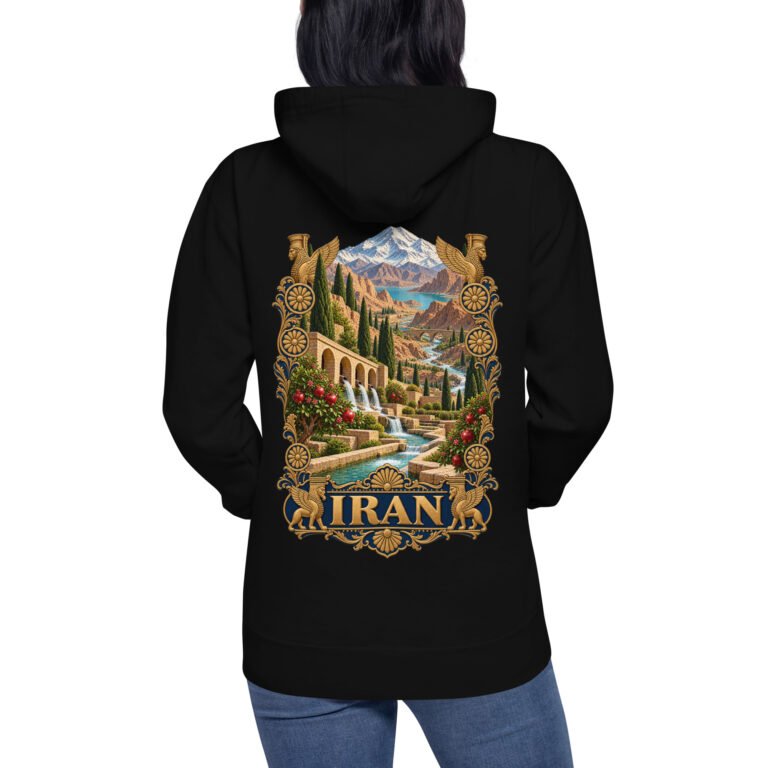
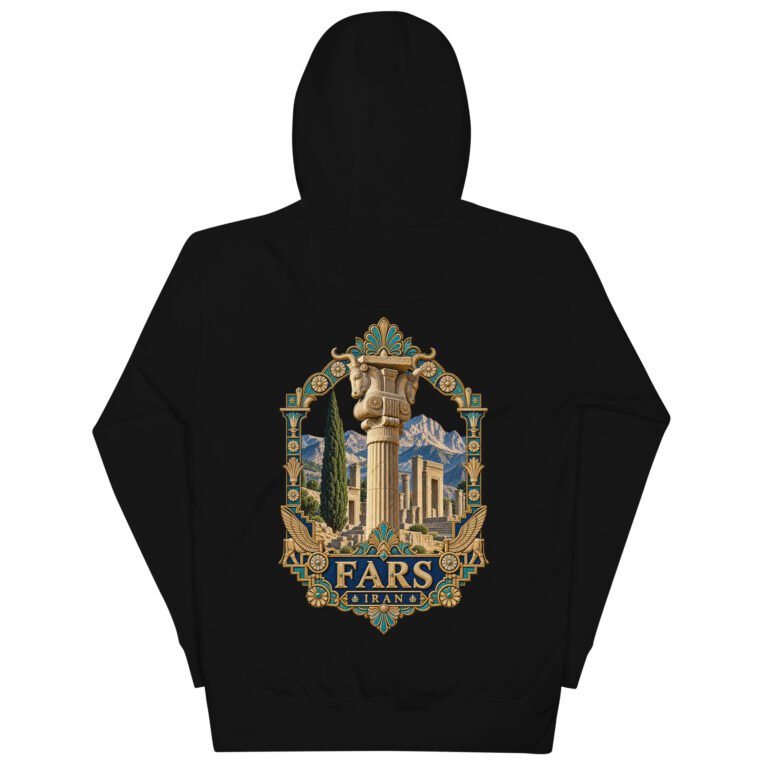
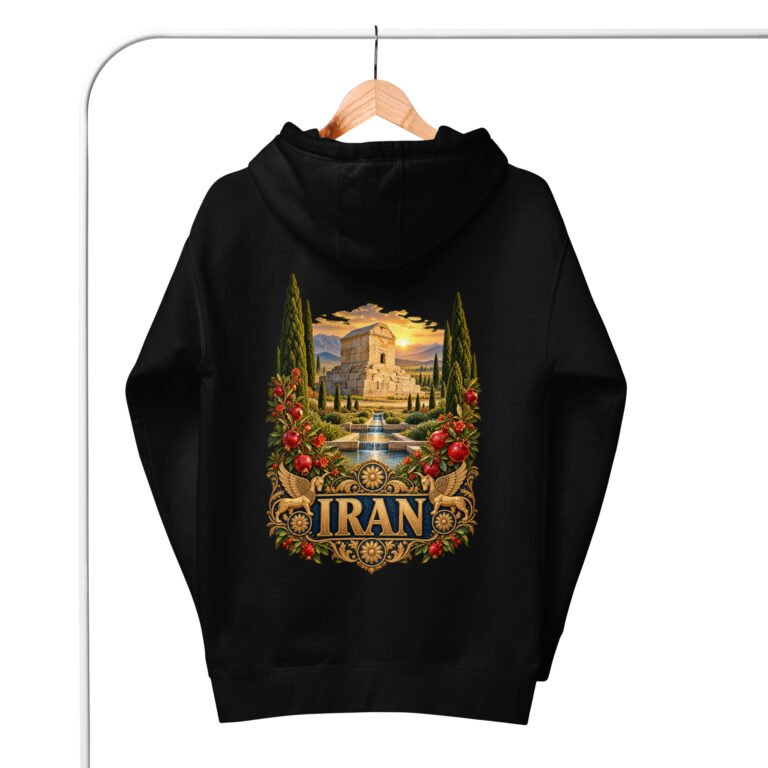
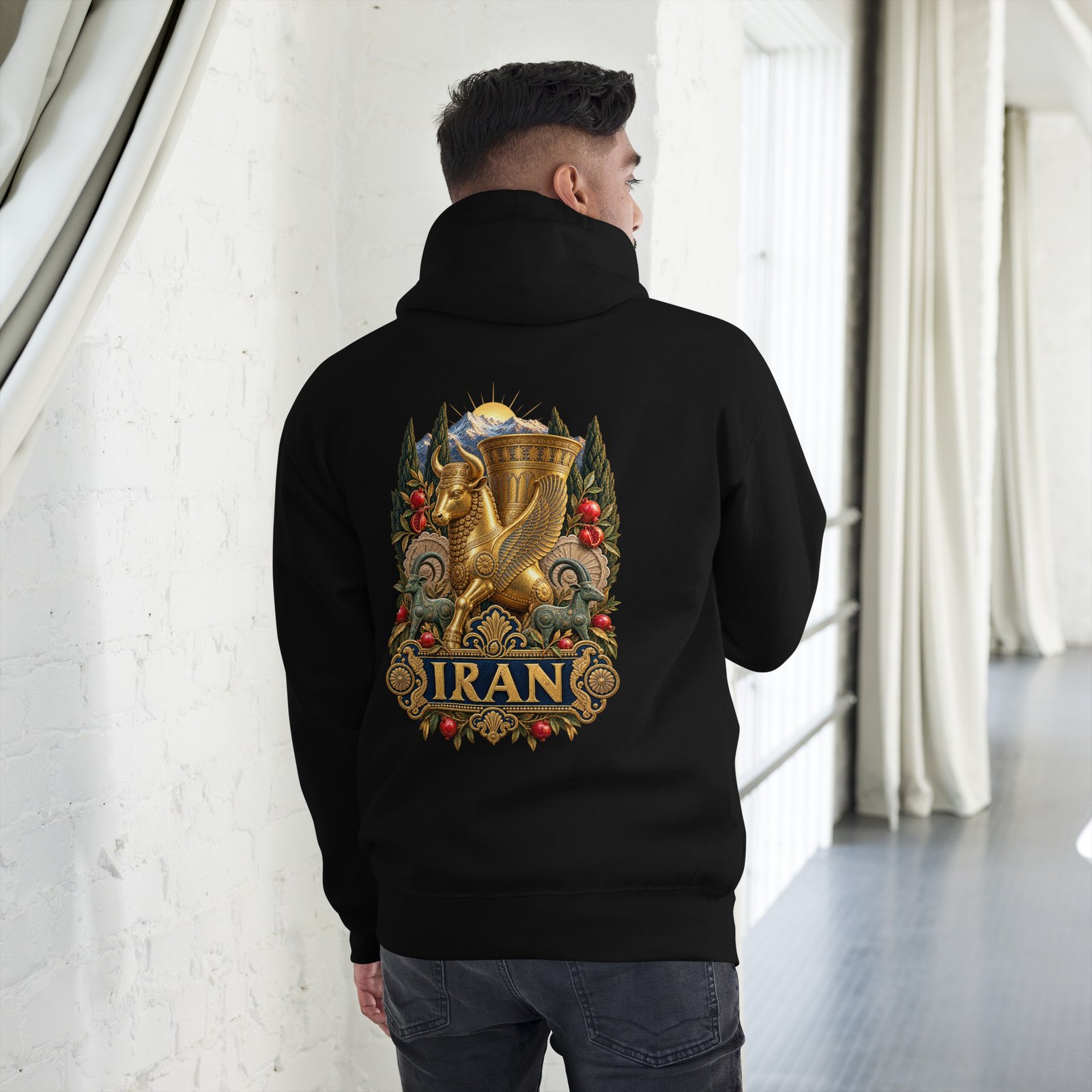
At Arya Roots, our Lion and Sun Collection honors this timeless emblem in its classic form, without the sword: the golden lion and the rising sun, together with the landscapes and landmarks of Iran, such as Mount Damavand and Persepolis. Every piece is an exclusive Arya Roots original, unisex for men and women, and printed to order.
You can also explore our Spirit of Iran Collection, inspired by the Simurgh, the Persian cheetah and the gardens of paradise, or find your home province in our Provinces of Iran Collection.
Frequently Asked Questions
What is the Lion and Sun called in Persian?
It is called Shir-o-Khorshid (شیر و خورشید), which means “lion and sun.”
How old is the Lion and Sun symbol?
Its roots go back to ancient astronomy, and it appears in Persian art from at least the 12th century. It became Iran’s official state emblem in the 19th century.
Was the Lion and Sun on the flag of Iran?
Yes. From the Constitutional Revolution of 1906 until 1979, the Lion and Sun stood at the center of Iran’s green, white and red flag.
Did the Lion and Sun always have a sword?
No. For centuries the emblem showed only the lion and the sun. The sword and crown were added during the Qajar era in the 19th century. Many modern designs, including ours at Arya Roots, return to this classic form.
Is the Lion and Sun a religious symbol?
No. It is a national and cultural symbol of Iran, rooted in astronomy and Persian art. Some people also connect the lion with Imam Ali, but the emblem belongs to all Iranians.