Every year, as autumn ends and winter begins, Iranians everywhere gather with the people they love for one of the oldest and warmest celebrations in the world: Yalda Night (Shab-e Yalda). It is a night of pomegranates and poetry, of grandparents’ stories and laughter that lasts until long after midnight.
In this guide, we explore the history of Yalda, the meaning behind its traditions, the foods that fill the table, and a few ideas for making this year’s Yalda unforgettable, wherever in the world you are.
What Is Yalda Night?
Yalda Night is the Persian celebration of the winter solstice, the longest and darkest night of the year. It falls on the night between the last day of autumn and the first day of winter, which is usually the night of December 20 or 21. In the Iranian calendar, this is the last night of the month of Azar.
Yalda is also known as Shab-e Chelleh, the “night of forty,” because it marks the beginning of the first forty days of winter. In 2022, Yalda/Chelleh was added to UNESCO’s list of the Intangible Cultural Heritage of Humanity, shared by Iran and Afghanistan.
The Meaning of Yalda: Light Defeats Darkness
The word Yalda comes from Syriac and means “birth.” For ancient Iranians, the longest night was a moment of struggle between darkness and light. After this night, the days begin to grow longer again, so Yalda became a celebration of the rebirth of the sun and the victory of light, warmth and goodness over darkness.
In popular tradition, Yalda is also linked to the birth of Mithra, the ancient Iranian deity of light and friendship. Families stayed awake together through the long night, keeping the fire burning and protecting one another until the sun returned at dawn. That spirit of togetherness is still the heart of Yalda today.
Yalda Night Traditions
Gathering at the home of the elders
On Yalda, families traditionally gather at the home of the oldest relatives: grandparents, aunts and uncles. The elders tell stories, share memories and pass the wisdom of one generation to the next. In the past, families sat together around the korsi, a low table covered with thick blankets and warmed from below.
Reading Hafez
No Yalda is complete without Fal-e Hafez. Each guest makes a silent wish or asks a question, then the book of poems by Hafez of Shiraz, the beloved 14th-century poet, is opened at random. The poem on that page is read aloud as an answer. Some families also read stories from Ferdowsi’s Shahnameh.
Staying up late
Yalda is a night to stay awake together, eating, talking and laughing late into the night, just as ancient Iranians waited together for the return of the sun.
The Yalda Table: Foods and Their Meaning
- Pomegranate (anar): the star of Yalda. Its deep red color recalls the glow of dawn and the warmth of life, and its many seeds stand for abundance and family.
- Watermelon (hendevaneh): eating summer fruit on the longest winter night is said to bring health and protect from the cold and illness of the coming winter.
- Ajil: a festive mix of nuts and dried fruits such as pistachios, almonds, hazelnuts, raisins, dried figs and roasted seeds, shared from a big bowl in the middle of the table.
- Persimmons, dates and sweets: many families add persimmons, dried fruit, halva and homemade sweets.
- Candles: warm light fills the room, a reminder that the sun will soon return.
Celebrating Yalda Away From Iran
For millions of Iranians abroad, Yalda is a precious link to home. Even far from family, you can keep the tradition alive: invite friends over, cut a pomegranate, light a few candles, open Hafez and video-call the grandparents. Many cities with Iranian communities now host Yalda events, and it is a beautiful night to share Persian culture with friends from every background.
Meaningful Yalda Gift Ideas
Gifts are not required on Yalda, but in many families it has become a lovely custom, especially for newlyweds and children. A meaningful Yalda gift connects the person to their roots:
- A book of Hafez or Persian poetry, perhaps in a bilingual edition.
- Persian sweets and ajil in a beautiful box.
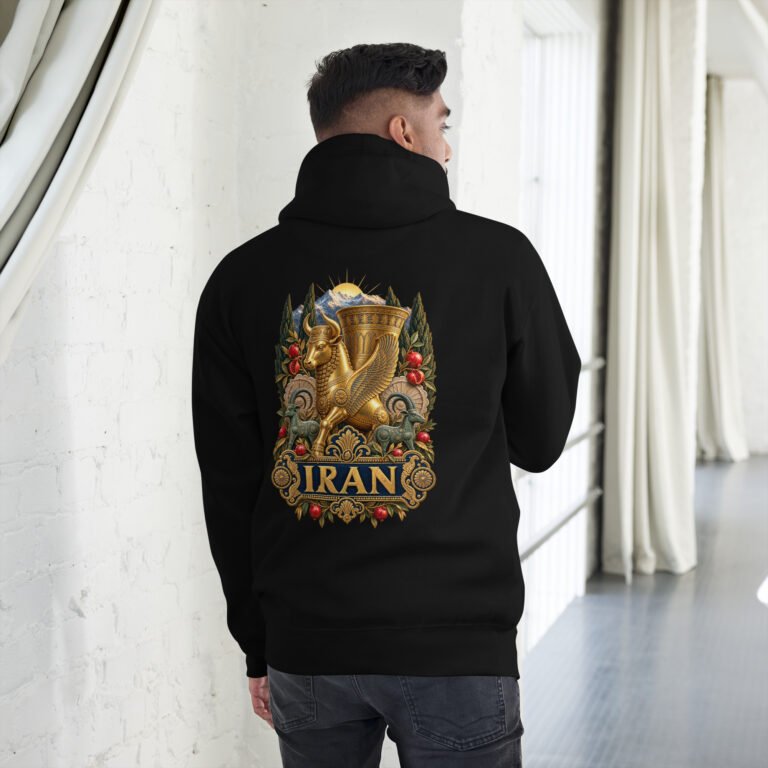
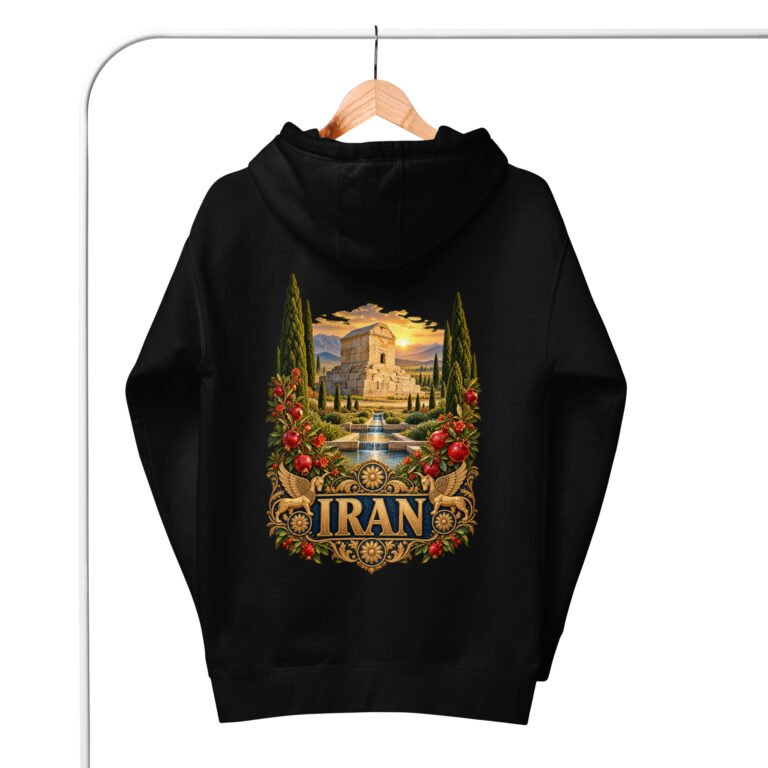
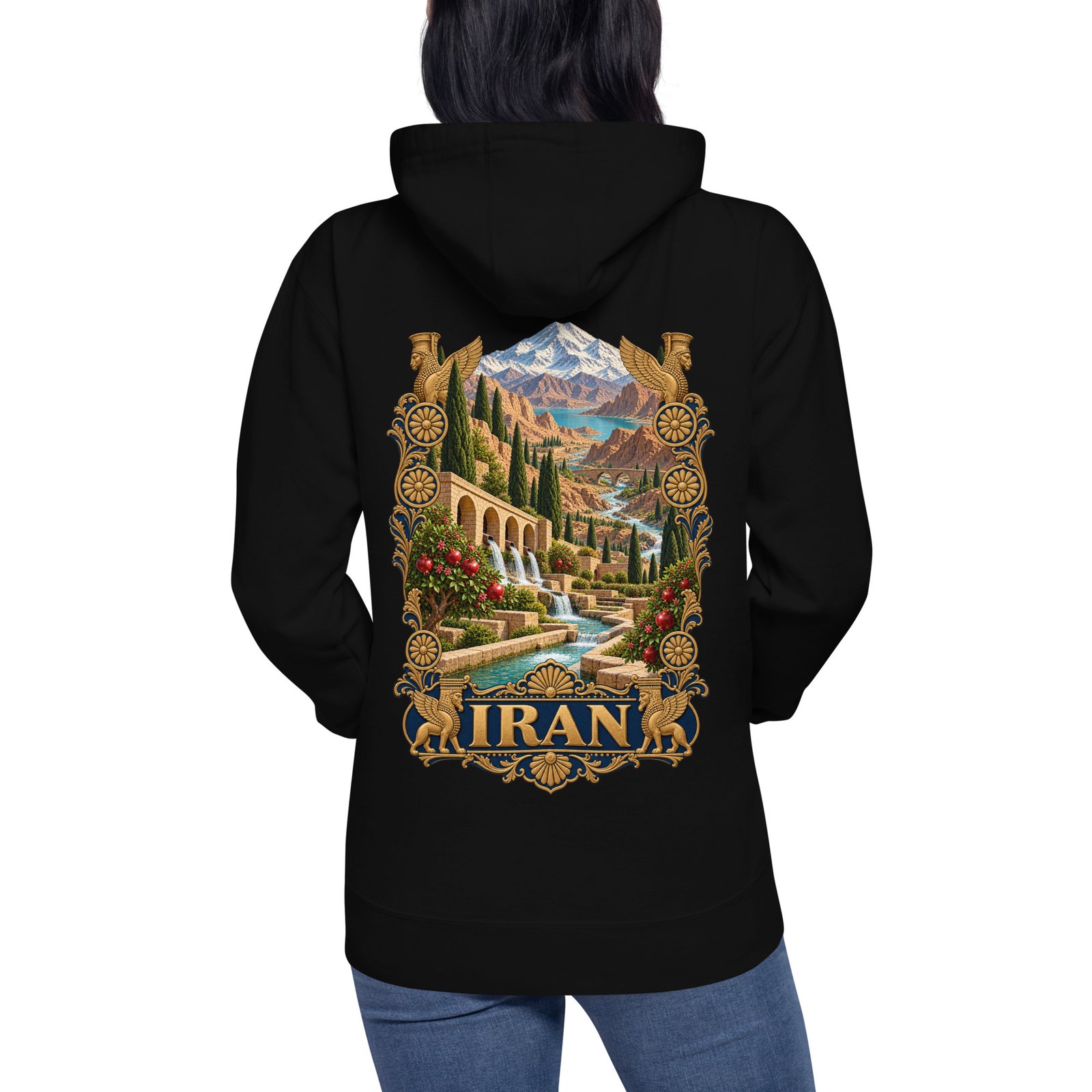
- Something to wear that tells a story. Our Spirit of Iran Collection features designs framed with pomegranates, the symbol of Yalda, alongside the Simurgh, the Persian Garden and the Iranian Cheetah. A warm hoodie is the perfect gift for the first night of winter.
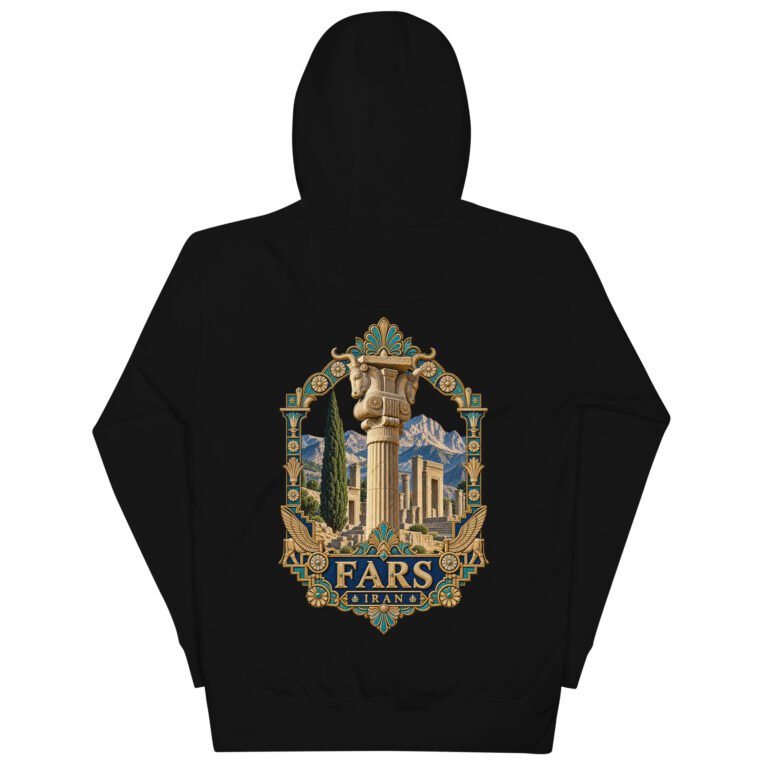
- A piece of home. Find the landmark of your family’s home province in our Provinces of Iran Collection, from Persepolis in Fars to Naqsh-e Jahan in Isfahan.
Tip: our pieces are printed to order, so we recommend ordering at least three to four weeks before Yalda to make sure your gift arrives in time.
Frequently Asked Questions
When is Yalda Night?
Yalda is celebrated on the longest night of the year, the winter solstice, usually the night of December 20 or 21.
What does Yalda mean?
The word Yalda comes from Syriac and means “birth,” referring to the rebirth of the sun after the longest night.
Why do Iranians eat pomegranates on Yalda?
The red pomegranate symbolizes the glow of dawn, life and abundance, and its many seeds represent family and blessings.
What is Fal-e Hafez?
It is a tradition of making a wish and opening the poetry book of Hafez at random; the poem on the page is read as an answer or a piece of advice.
Is Yalda a religious holiday?
No. Yalda is a cultural celebration with ancient roots, enjoyed by Iranians of every faith and background.